Getting your blood drawn?
You sit there, trying not to look at the needle. The cold alcohol swab, the anxious wait, and that one nurse who can’t find your vein and you hear “let’s try the other arm”...
If a machine scans your arm, finds the perfect vein instantly, and completes the process with near-zero discomfort? That’s robots taking blood, and it’s already reshaping modern healthcare.
A blood-drawing robot at a hospital in Hangzhou, China, with a 94.3% success rate
Source: newsflare
What Does It Mean When Robots Draw Blood?
When people search for robots drawing blood or a robot taking blood samples, they’re referring to automated systems that can perform procedures traditionally done by humans.
A typical robot blood draw machine uses a mix of:
➠ AI algorithms
➠ Infrared imaging
➠ Robotic arms
Together, they identify veins and perform the procedure with impressive accuracy. Compared to manual methods, a robotic blood taker can significantly reduce errors, especially in patients with difficult veins. Faster diagnostics and a much smoother patient experience.
Smarter Monitoring Too
A robot taking blood pressure today is part of a much bigger ecosystem. With AI healthcare automation becoming mainstream in 2026, these systems can:
➠ Track vitals continuously
➠ Detect early warning signs
➠ Sync data with digital health platforms
This is where remote patient monitoring AI comes. Useful for elderly care and chronic illness management.
Do Robots Have Blood?
A surprisingly common question: do robots have blood? No.
But researchers are exploring fluid-based systems that mimic biological processes. While not “blood” in the human sense, these innovations help robots function more efficiently and interact better with the human body.
It’s more about them understanding us better.
Inside the Body: Robots in the Bloodstream
Scientists are actively working on robots in bloodstream environments. Tiny machines designed to travel through your veins. These are often linked to searches like robots for use in the human bloodstream.
These microscopic devices could:
➠ Deliver targeted medication
➠ Break down clots
➠ Assist in early disease detection
This field sits at the intersection of precision medicine technology and nanotechnology in healthcare, both of which are major innovation drivers right now.
Types of Intelligent Blood Collection Robots
According to the latest article by NIH (National Library of Medicine | National Center for Biotechnology Information),
1. Fingertip Blood Collection Robots
Fingertip blood collection robots are designed for small-scale, quick sampling. Useful for people who need frequent testing, such as diabetes patients.
These robots usually include:
➠ A blood collection unit
➠ A sensing and imaging system
➠ A robotic movement mechanism
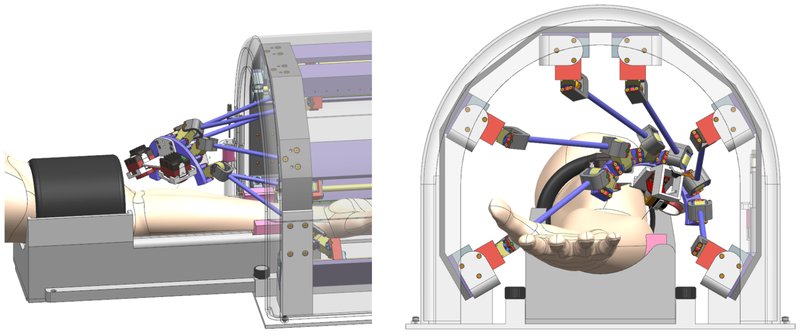
They use advanced vision tools like near-infrared imaging and 3D vision systems to identify tiny blood vessels in the finger. Once the best puncture point is found, the robot performs a highly precise needle insertion, often guided by laser systems.
Because of this smart detection and precise control, fingertip blood collection robots can work quickly and reduce errors during sampling.
2. Upper Limb Vein Blood Collection Robots
Blood collection from arm veins is one of the most common medical procedures in hospitals.
However, in real-life situations with infants, elderly patients, or people with hard-to-find veins, manual blood drawing can be difficult and sometimes painful.
This is where upper limb blood collection robots are useful. Current research focuses on improving:
➠ Robotic arm movement
➠ Needle accuracy
➠ Sensor sensitivity
➠ AI-based decision-making algorithms
The main goal is to increase success rates while minimizing discomfort and damage to blood vessels.
3. Blood Collection from Other Body Areas
In some cases, blood needs to be drawn from alternative sites depending on the patient’s condition.
For example:
➠ Newborns and infants: The heel is commonly used because it is safer and avoids major nerves and veins.
➠ Patients with difficult veins: Areas like the neck vein may be used when standard sites are not suitable.
➠ Severe burn or obesity cases: The femoral vein may be selected for easier access.
➠ Routine arterial tests: The wrist artery is often used because it is close to the surface and easy to access.
These alternative methods ensure that blood collection is still possible even in complex medical situations.
Why this Shift Matters
The rise of robotic systems in healthcare is beyond convenience. It’s solving real challenges.
Consistency and Accuracy
Machines don’t get tired or distracted, which reduces procedural errors.
Scalability
With increasing demand, autonomous medical robots help bridge gaps in healthcare access.
Better Patient Experience
Less pain, fewer retries, and quicker results make a huge difference in patient comfort.
The Bigger Trend: AI + Healthcare in 2026
All of this ties into a larger movement, digital health transformation. Some of the most impactful trends right now include:
➠ AI-powered medical devices improving diagnostics
➠ Machine learning in diagnostics enabling faster disease detection
➠ Smart diagnostics AI enhancing decision-making
Robotic blood collection is just one of the rooms. The idea of a robot handling something as delicate as a blood draw might feel a bit intimidating at first. But once we see the precision, the speed, and the comfort it brings, it is believed that it will start to make sense.
While we speak a lot about ‘Robots taking blood,’ it is more about making the system smarter, faster, and more reliable for everyone.
We trust apps with our money, food, and entire social lives. Trusting a robot to get a blood draw right on the first try? Now, will you look at the robot while drawing blood or still tighten your fist and look away?