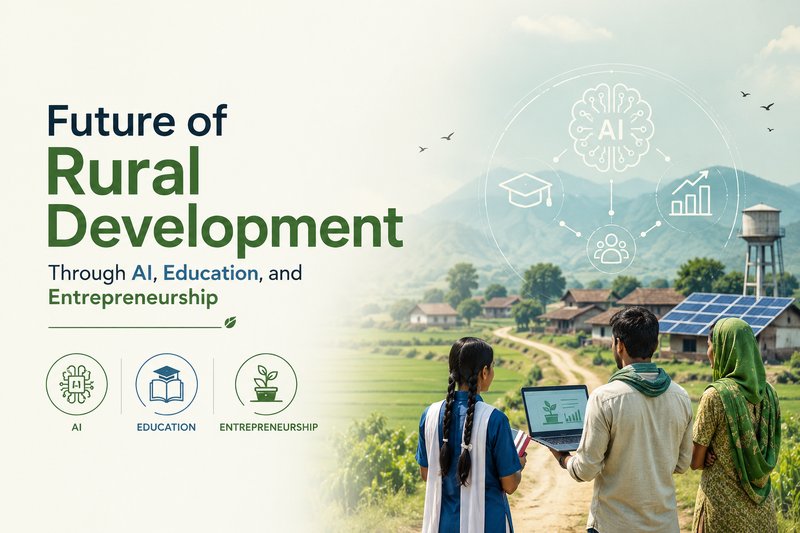
Rural development has become one of the most important priorities for nations seeking inclusive economic growth and social progress. In many developing countries, rural areas continue to face challenges such as unemployment, limited educational opportunities, poor healthcare access, low agricultural productivity, and migration toward urban regions (UNDP, 2022). However, the rise of Artificial Intelligence (AI), modern education systems, and rural entrepreneurship is transforming the future of villages and small communities. These three pillars are creating new opportunities for innovation, employment, and sustainable development.
AI technologies are improving farming methods, education is empowering rural youth with skills and knowledge, and entrepreneurship is encouraging self-reliance and local business growth (World Bank, 2021). Governments, startups, and non-governmental organizations are increasingly investing in digital infrastructure and skill development programs to bridge the rural-urban gap. This article explores the concept of rural development through AI, education, and entrepreneurship, highlighting its benefits, challenges, future opportunities, and its potential to create smarter and more sustainable rural societies.
A. Concept and Overview
Rural development refers to improving the quality of life and economic well-being of people living in villages and remote regions. Traditionally, rural development focused mainly on agriculture, infrastructure, and poverty reduction. Today, the concept has expanded to include digital transformation, technological innovation, education, and entrepreneurship (UNDP, 2022).
Artificial Intelligence is playing a major role in transforming rural economies. AI-powered tools help farmers predict weather conditions, monitor crop health, reduce wastage, and improve productivity through smart farming techniques (FAO, 2021). Machine learning and data analytics also support rural healthcare and financial inclusion by providing faster and more accessible services.
Education acts as the foundation of rural transformation. Digital learning platforms, online courses, and skill development initiatives allow rural students to access quality education regardless of geographical barriers (UNESCO, 2021). Modern education not only improves literacy but also encourages innovation and critical thinking among youth.
Entrepreneurship creates employment opportunities and promotes self-sustainability in villages. Rural entrepreneurs are using technology to launch agribusinesses, handicraft enterprises, e-commerce platforms, and service-based startups. Together, AI, education, and entrepreneurship form a strong framework for creating economically empowered and socially developed rural communities.
B. Importance and Benefits
The integration of AI, education, and entrepreneurship in rural development offers significant economic and social benefits. One of the most important advantages is increased agricultural productivity. According to studies on digital agriculture, AI-based precision farming can improve crop yields by nearly 20–25% while reducing water and fertilizer usage (FAO, 2021). Smart irrigation systems and drone technology help farmers make informed decisions, reducing losses caused by climate change and unpredictable weather.
Education also contributes greatly to rural progress. Digital education platforms have expanded access to learning opportunities for rural students. Online skill development programs in coding, digital marketing, financial literacy, and vocational training are helping young individuals become job-ready (UNESCO, 2021). During the COVID-19 pandemic, online learning became an essential tool for continuing education in remote areas, highlighting the importance of digital connectivity.
Entrepreneurship encourages economic independence and reduces unemployment in villages. Many rural women are now becoming entrepreneurs through self-help groups and online businesses. For example, women-led enterprises in handicrafts, dairy farming, food processing, and organic farming have increased household income and improved community participation (International Journal of Rural Development and Management Studies, 2020). E-commerce platforms enable rural producers to reach national and international markets without depending entirely on middlemen.
Governments and organizations are also supporting rural innovation through startup funding and digital initiatives. Programs such as Digital India, rural skill missions, and agricultural technology schemes are creating opportunities for rural youth to participate in the digital economy (Government of India, 2023). AI-driven mobile applications now provide farmers with real-time market prices, weather forecasts, and crop management guidance.
Another important benefit is the reduction of rural-to-urban migration. When employment, education, and business opportunities become available within villages, people are less likely to migrate to overcrowded cities. This helps maintain social stability and balanced regional development (World Bank, 2021).
Overall, the combination of AI, education, and entrepreneurship improves productivity, enhances living standards, creates employment opportunities, promotes gender equality, and strengthens rural economies.
C. Challenges and Problems
Despite its potential, rural development through AI, education, and entrepreneurship faces several challenges. One major issue is the digital divide. Many rural areas still lack reliable internet connectivity, electricity, and digital infrastructure, making it difficult to implement advanced technologies effectively (World Bank, 2021).
Limited digital literacy is another challenge. Many rural populations, especially older generations, are unfamiliar with AI tools and online platforms. Financial limitations also prevent small farmers and entrepreneurs from investing in modern technologies or starting businesses.
Educational inequality continues to affect rural communities due to a shortage of trained teachers, poor educational facilities, and limited access to quality resources (UNESCO, 2021). Additionally, social barriers such as gender inequality and lack of awareness can restrict participation in entrepreneurship and skill development programs.
D. Solutions and Future Scope
To ensure successful rural development, governments and organizations must invest in digital infrastructure, affordable internet services, and technological accessibility. Expanding broadband connectivity in villages will allow rural populations to benefit from online education, digital healthcare, and AI-powered services (Government of India, 2023).
Digital literacy programs should be introduced at the community level to help people understand and use technology effectively. Schools and colleges must integrate AI awareness, entrepreneurship training, and practical skill development into their curriculum. Vocational training centers can provide specialized courses in agritech, digital business management, and financial literacy.
Financial support is equally important. Governments and banks should offer low-interest loans, startup funding, and subsidies for rural entrepreneurs and farmers adopting AI technologies (World Bank, 2021). Public-private partnerships can help establish innovation centers and incubation hubs in rural regions to encourage local startups.
Women and youth should receive special support through mentorship programs and self-employment initiatives. Encouraging women entrepreneurs can strengthen local economies and promote gender equality. AI-based mobile applications in regional languages can also improve accessibility for non-English-speaking populations.
The future scope of rural development is highly promising. Smart villages powered by renewable energy, digital education, AI-driven healthcare, and sustainable agriculture could become a reality in the coming decades (UNDP, 2022). Emerging technologies such as robotics, blockchain, and Internet of Things (IoT) devices are expected to further revolutionize farming and rural businesses.
With proper policy implementation and community participation, rural regions can transform into centers of innovation, sustainability, and economic growth. The integration of technology and entrepreneurship has the potential to create self-reliant villages and contribute significantly to national development.
CONCLUSION
The future of rural development depends greatly on the successful integration of Artificial Intelligence, education, and entrepreneurship. These three factors together can transform villages into economically productive, technologically advanced, and socially empowered communities. AI improves agricultural efficiency and service delivery, education equips individuals with knowledge and skills, while entrepreneurship creates employment and promotes self-reliance (FAO, 2021).
Although challenges such as digital inequality, lack of infrastructure, and limited awareness still exist, strategic investments and supportive government policies can overcome these barriers. By promoting digital literacy, innovation, and inclusive economic opportunities, rural communities can achieve sustainable growth and improved living standards. The future of rural development lies not only in technological advancement but also in empowering people to participate actively in the digital and entrepreneurial economy.
REFERENCES
- Food and Agriculture Organization (FAO). (2021). Artificial Intelligence in Agriculture and Rural Development Studies.
- Government of India. (2023). Digital India Initiative and Rural Skill Development Reports.
- International Journal of Rural Development and Management Studies. (2020). Women Entrepreneurship and Rural Economic Growth.
- UNESCO. (2021). Digital Learning and Rural Education Development Reports.
- United Nations Development Programme (UNDP). (2022). Rural Development and Sustainable Growth Report.
- World Bank. (2021). Digital Agriculture and Rural Economy Report.